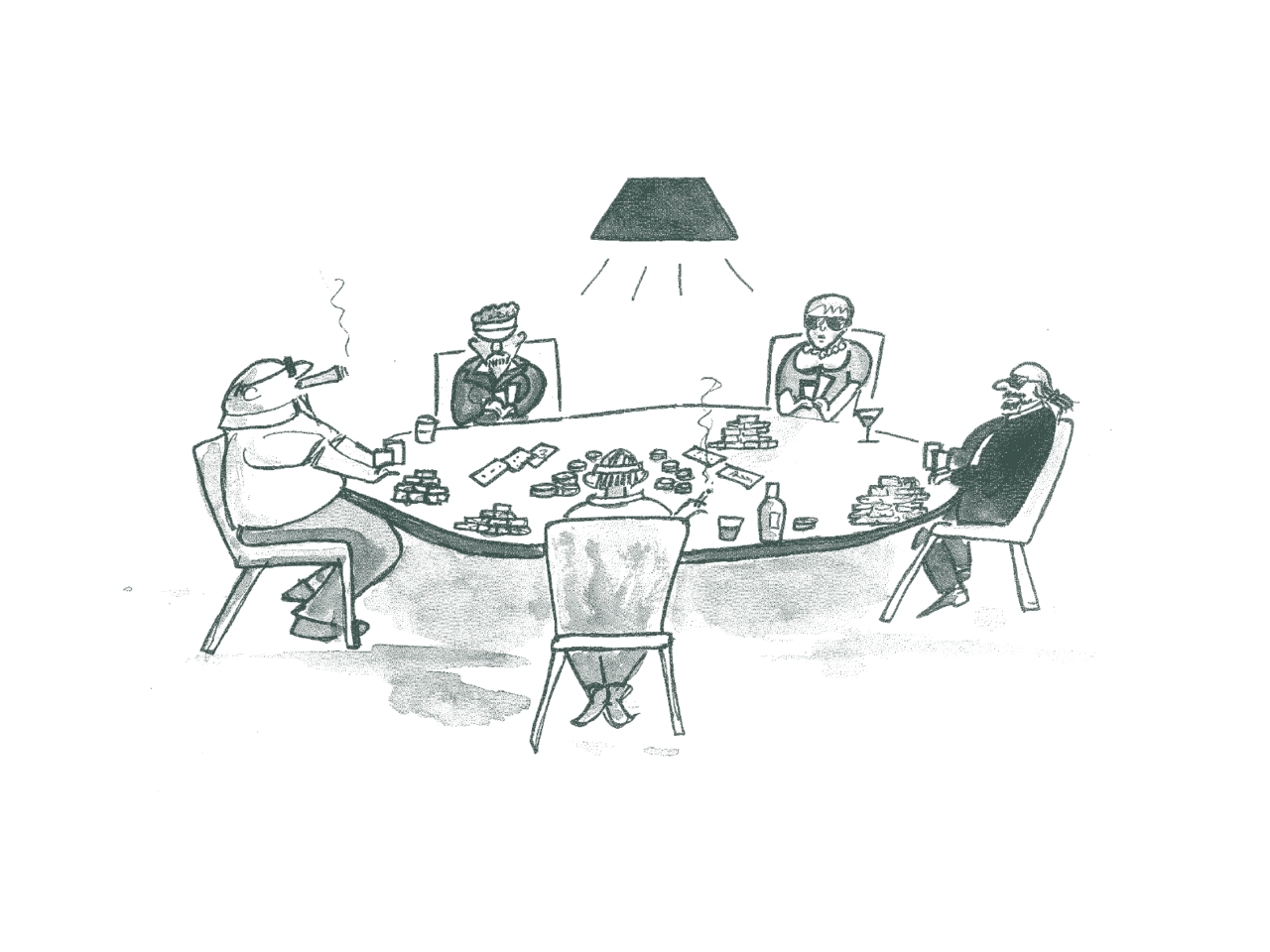
Ordinarily, I would have dismissed a book covering psychology and poker. I’ve never played the game; when it’s mentioned, my mind drifts to Kenny Rogers’ sleep-deprived gambler riding a "train bound for nowhere". But the recommendation came from a colleague, my co-author, Jack, and the psychology caught my interest. The book, Annie Duke’s “Thinking in Bets”, describes the trap of resulting - judging the quality of a decision solely by its outcome, rather than by the process behind it. She argues that resulting typically reinforces bad decision-making that happens to work out and undermines good decision-making when it happens to fail. Recognising one’s own descent into these cognitive traps is notoriously difficult. We also agreed that the timing was apt. Against the backdrop of a rising but concentrated market over recent years, this thinking is becoming more common. Left unchecked, investors risk abandoning proven strategies in favour of short-term results that may not last. How, then, can they guard against it?
This is a financial promotion issued by McInroy & Wood Limited and McInroy & Wood Portfolios Limited (‘McInroy & Wood’), both regulated by the Financial Conduct Authority. Please note that historic performance is not a guide to, or guarantee of, future returns. The value of investments and the income they generate can fluctuate and may go down as well as up.
The end of any reporting period – quarters, years or even decades – prompts reflection. Investment managers are no different. We look back, taking stock of market movements over the period, measuring performance against market indices and various other comparators. For investors in high-quality companies, of the sort we are and always have been drawn to at McInroy & Wood, the past few years have proven difficult at a time when markets have reached all-time highs. Quality companies have fallen out of favour as more people invest, knowingly or otherwise, in companies whose share prices are being driven by momentum and not necessarily the underlying performance of the business. It is only modestly comforting to see some of the world’s most highly respected money managers expressing similar disappointment at the returns produced by their portfolios in recent years. Many of these managers have seen their assets fall as their investors become impatient and reduce their holdings.
Annie Duke would have us question whether it is rational to seek greener pastures in such circumstances. When an investment manager who has produced very respectable results for decades has a few disappointing years, is it right to rush for the exit? Are markets so different this time as to leave them, and the investment strategy that has served them so well, behind? Have they truly lost their edge? Worse, if investors switch, they may be guilty of resulting twice: once when evaluating the manager they are leaving and again when selecting a new manager or investment strategy based on recent performance.
Through the lens of poker, where controllable and uncontrollable forces intertwine, just as they do in securities markets, Duke argues that long-term success depends on the quality of the decision-making process, while short-term outcomes are far more likely to be influenced by chance. Even the most skilled poker player, she explains, can play their hand masterfully and lose due to simple misfortune. Or they can execute dreadfully and find themselves collecting the chips. Investment managers navigating unpredictable markets face the same reality. In both cases, the professional relies on a well-considered, well-tested approach to increase the likelihood of positive results over several years or across dozens of hands. It is, therefore, the process that should be the focus of any assessment.

Duke goes on to explain that decision-making should be evaluated based on the information, reasoning, and discipline applied at the time, and not on how things turned out or on information available after the fact. We must focus on the quality of the decisions themselves and the process underpinning them at the time they were made.
A stupid decision that works out well becomes a brilliant decision in hindsight.
Nobel prize-winning psychologist, Daniel Kahneman, “Thinking, Fast and Slow”, 2011
Duke’s requirement to ignore how things turned out is not as straightforward as it might seem. Scholars Baron and Hershey showed in their seminal 1988 paper on outcome bias that even when asked to ignore results, we tend to view decisions that pay off as better, and those that don't as worse. How to overcome this, they suggest, is to consider how the verdict of the assessment would differ had the opposite outcome occurred. Imagine the losing strategy winning and vice versa.
When conducting an evaluation, it is also critical to ensure that an adequate number of decisions are scrutinised to provide meaningful insight. This intuitively makes sense. The effectiveness of a process is revealed over time, thereby providing greater confidence in its ability to produce success again in the future. Where historical evidence is scarce, however, this is more challenging.
The phenomenon of resulting reaches into countless areas beyond investing or poker. Many sports can be great showcases of this cognitive bias, not least because, like in investment, there are both participants (players) and evaluators (pundits) prone to the same mistake. The 2019 Cricket World Cup Final is a striking example. Having failed 11 times previously, England triumphed over New Zealand to win the tournament. “England’s Road to World Cup Victory Was Planned to Perfection Over Last Four Years”, read one headline. It reflected a commonly held view in the mainstream press. Yet anyone who watched the match would tell a different story. The outcome would likely have been the reverse but for a miraculous stroke of luck. A throw headed back to the stumps deflected off Stokes' bat as he dived to make his ground and avoid being dismissed. The ricochet sent the ball rolling to the boundary, giving England the critical runs they needed to go on and win. Now, imagine how the headlines might have differed had that strange twist of fate never happened. Would England’s four years of perfect planning be viewed in the same way?
Sport is also littered with examples of outcome bias. How Gareth Southgate’s life might have been different had Andreas Köpke, the German keeper, not saved his penalty in Euro 1996. Few remember Jordan Henderson’s missed penalty during the shoot-out against Colombia at the 2018 World Cup, because England went on to win the match. Eric Dier scored the winning penalty, which bore a striking resemblance to Southgate’s kick that was saved. Drawing conclusions from these fleeting moments is worse than unfair, but we seem unable to suppress it. Concluding that ‘the scoreboard doesn’t lie’ is much easier than conducting a thorough analysis of what took place. These shortcuts, or heuristics, as psychologists term them, often interfere with good decision-making.
Michael Jordan played 15 years, won six championships. The other nine years was [sic] a failure?
Giannis Antetokounmpo, 10x US National Basketball Association All-Star
To illustrate the point, imagine predicting the future of a professional tennis player based on a single match in which they lost 6–0 in the final set of a crushing straight-sets defeat. That’s exactly what happened to Roger Federer in 2008, when he lost to Rafael Nadal in the final of the French Open. The scoreboard didn’t lie – Nadal was the far better player on the day. But extrapolating a deeper meaning from the result would have been a mistake, for Federer or anyone else. Federer went on to reach another 15 Grand Slam finals, winning eight, before retiring in 2022.
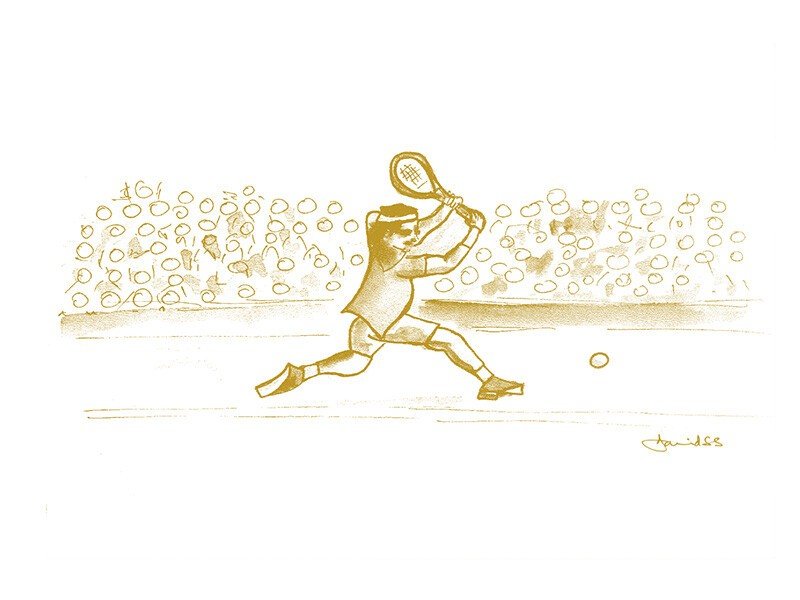
The broader circumstances and context in which a result occurred should not be ignored. By focusing on one result or a single event, we discard critical information. And by drawing on such a small sample, we can allow chance to exert undue influence on our assessment.
In our view, this is the power of a track record earned over an extended period. The body of evidence from which to draw conclusions is substantial. It captures unusual circumstances, curiosities, and one-offs. And while chance may always be present, its influence on outcomes diminishes as the sample size increases. By drawing on a wealth of information, we can protect against a good process being wrongly disregarded and provide justification for abandoning an ineffective process, even if it happens to have led to favourable recent outcomes.
In investing, a track record allows investors to form objective expectations about the future with greater confidence, without placing undue weight on recent returns as a predictor of future success. In the investment world today, the importance of this final point is difficult to overstate.
Speak to any long-in-the-tooth money manager, and they will tell you that we are in a rather odd market. Some say it isn’t to be trusted, others that it is primed for a meaningful setback. Many reference the level of concentration in major US technology companies, frothy valuations, and the market distortion created by the rise of passive and other momentum-driven investment strategies. Faced with these challenges, we have chosen to maintain discipline and stick to our investment process.
We have been picking stocks and determining our asset allocations using the same rigorous principles as those used over the course of our firm’s 40-year history. We believe a portfolio of high-quality companies gives our clients and investors the best possible chance to maximise their returns at an acceptable level of risk over the long-term. Admittedly, in this unusual market, this approach has proven less effective than in previous periods, with returns dipping below long-term averages. While spells of weaker performance are always unwelcome, they are a frustrating part of life as an investor and as an investment manager. Even the very best have dull periods; the greatest poker players lose tournaments, as do the finest tennis players.
When delivering a commencement speech at Dartmouth College, Federer revealed that over his illustrious professional tennis career, he won only 54% of the points he played. It is possible, he explained, to “work harder than you thought possible and still lose”. But once the point had been played, no matter the outcome, Federer moved on. This mindset, he sought to impress upon his ambitious young audience, “frees you to fully commit to the next point and the next one after that with intensity, clarity and focus.” As Annie Duke would recommend, Federer stuck to his trusted process throughout his career. The results this delivered are beyond any doubt. At McInroy & Wood, we are following suit.
Authors:
Cameron MacKinnon and Jack McNair
Nothing in this article should be deemed to constitute the provision of financial, investment or other professional advice in any way. This article reflects McInroy & Wood’s opinions at the date of publication only, the opinions are subject to change without notice, and McInroy & Wood shall bear no liability for any loss arising from reliance on them.

We explore this deceptively simple question, examining the cognitive trap of judging decisions by their short-term outcomes rather than the quality of the process behind them.
Markets don't like uncertainty - and right now there is plenty of it. Conflict in the Middle East, questions over oil supplies and renewed tariff tensions have all tested investor confidence. How are our clients’ portfolios positioned for this environment, any why?
ESG investing and the energy transition have failed to reduce global carbon emissions over the last decade. What factors have slowed the energy transition? And how should investors prepare for the next ten years?